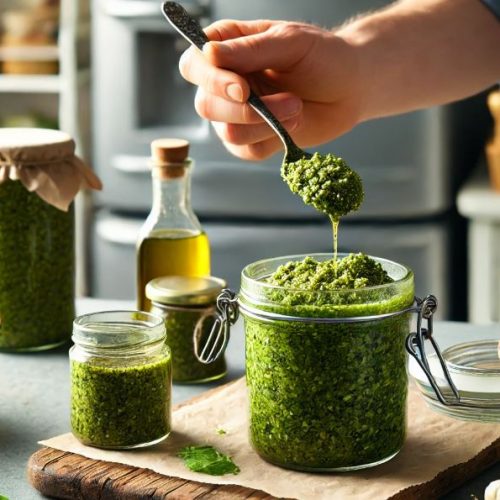
Wild Garlic Pesto Recipe
Crafting wild garlic pesto at home is both rewarding and remarkably simple. It brings seasonal, foraged ingredients into the kitchen and offers a delicious alternative to traditional pesto.
Ingredients
- 100 g Wild Garlic Leaves Fresh and washed thoroughly
- 50 g Pine Nuts Toasted for richer flavour
- 50 g Parmesan Cheese use vegetarian hard cheese if needed
- 100 ml Olive Oil Extra virgin for best flavour
- 1 tbsp Lemon Juice Optional – for brightness
- Salt
- Black Pepper Freshly cracked
Instructions
- The process begins by thoroughly rinsing 100 grams of wild garlic leaves in cold water to remove soil or insects. The leaves should then be patted dry using a clean tea towel or left to air-dry on kitchen paper. Ensuring the leaves are dry prevents water from diluting the pesto.100 g Wild Garlic Leaves
- In a dry frying pan over medium heat, toast 50 grams of pine nuts (or the chosen alternative such as walnuts, almonds, or sunflower seeds) until they’re lightly golden. This enhances the depth of flavour and adds a subtle nuttiness to the final sauce. Stir regularly to prevent burning, then remove from heat and let cool.50 g Pine Nuts
- If using Parmesan or a vegetarian hard cheese, grate about 50 grams and set aside. Pre-grated cheese can be used in a pinch but freshly grated cheese tends to integrate better into the pesto.50 g Parmesan Cheese
- In a food processor or blender, combine the following: Wild garlic leaves, Toasted and cooled nuts, Grated cheese, A pinch of sea salt, A few cracks of black pepperSalt, Black Pepper
- Pulse the ingredients together for a few seconds until roughly chopped. Then, while the processor is running, gradually pour in 100 millilitres of extra virgin olive oil. This step ensures the oil emulsifies properly, creating a smooth yet textured consistency.100 ml Olive Oil
- Taste the pesto and adjust seasoning if necessary. Add a tablespoon of fresh lemon juice to brighten the flavour, especially if the leaves are strong or slightly bitter. For a thinner pesto, more olive oil can be added.1 tbsp Lemon Juice
- Once blended to the desired texture, transfer the pesto into a clean, airtight jar. Smooth the top and pour a thin layer of olive oil over the surface to preserve freshness and colour.
- Store in the refrigerator and use within one week, or freeze in small portions for longer shelf life.